
Peritus Games builds asynchronous 1v1 skill games and licenses them to other platforms.
Nobody at your company is on the other side of the game
A player who loses looks for the reason, and if the product they lost to is also the thing that collected, they do not have to look far. Most of the time that suspicion is unfounded. It is still cheap to hold, impossible to answer from the inside, and it is the sort of thing a careful player leaves a product over.
In the games we license, the opponent is another player. Nobody on your side is playing against your players, and neither are we: our fee is charged on the match, and it is the same fee whichever player wins.
The operator’s side of it
Three consequences, and the cost of each
Fair by construction
Both players are dealt the identical game and compared on what they did with it. The score is arithmetic we do from the moves, never a number a browser reports, and the loser is handed the finished match to read back. That does not make losing pleasant. What it does is make the game cheated me checkable, instead of something a player settles quietly and never mentions to you again.
A match outlives the session
The two players never share a clock, so a match begun at lunch is still open when the app is closed, and it settles once the other side has played. What that leaves behind is a result waiting, which is a reason to reopen the app that nobody had to send. It is a slower loop than a live table, and there is no drama in it.
No side to take
A paid match is funded by the two players between them, and each of them is playing the other. There is no version of these games we could tune towards one side, because there is no side in them to tune towards. What that leaves you is an answer when a player writes in certain the product was against them. It is an argument about how the thing is built, which is not what somebody who has just lost wants to hear.
The portfolio
Nine games, playable in a browser
Solitaire, poker, trick-taking, dice, push-your-luck, and two games about counting down a deck in front of you. Each runs the engine a player would be served, with nothing to install.
A match runs three to five minutes and fits on one screen. Nobody has to set an evening aside for one.
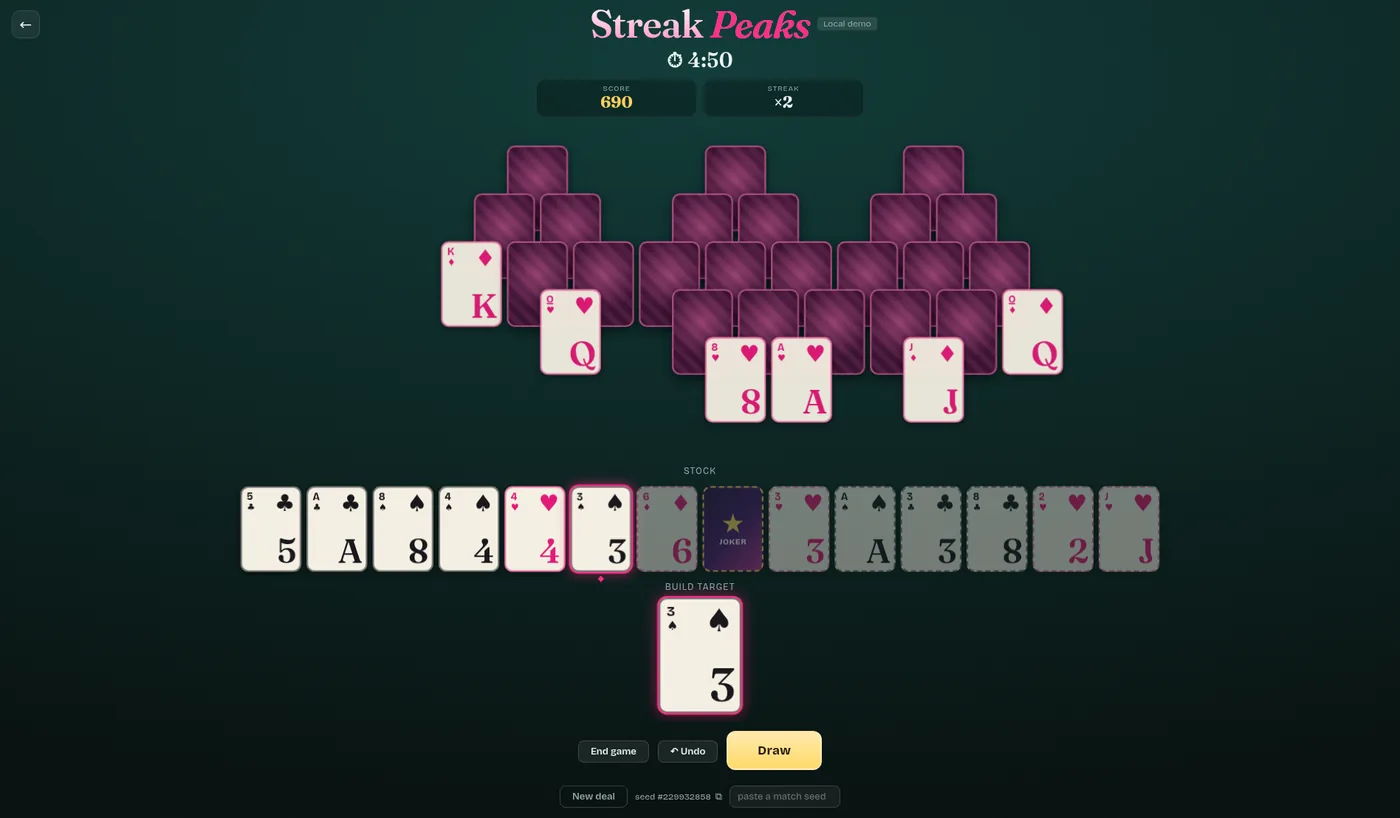
- Streak Peaks5 minPyramid solitaire, streak-scored
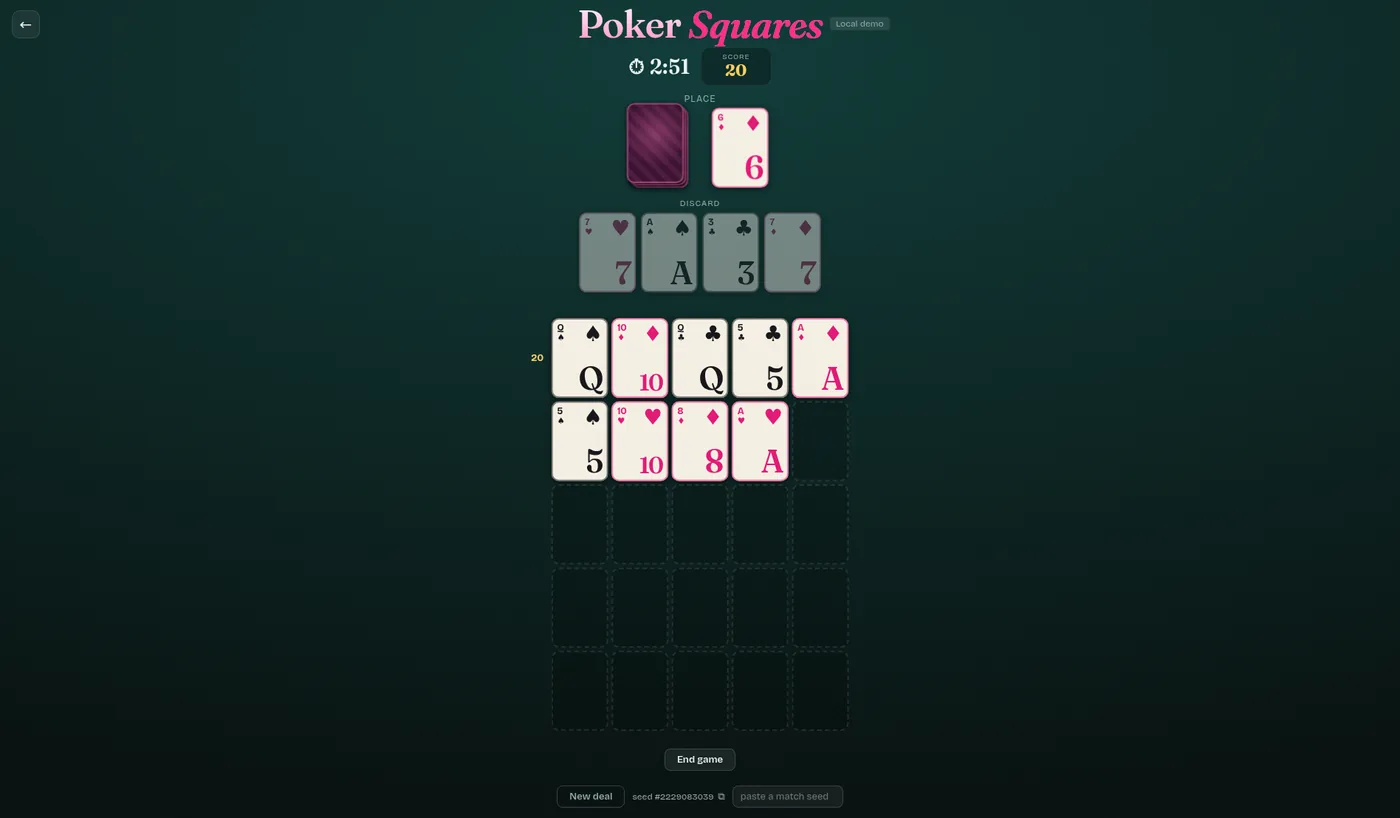 Poker Squares3 minOne grid, ten poker hands
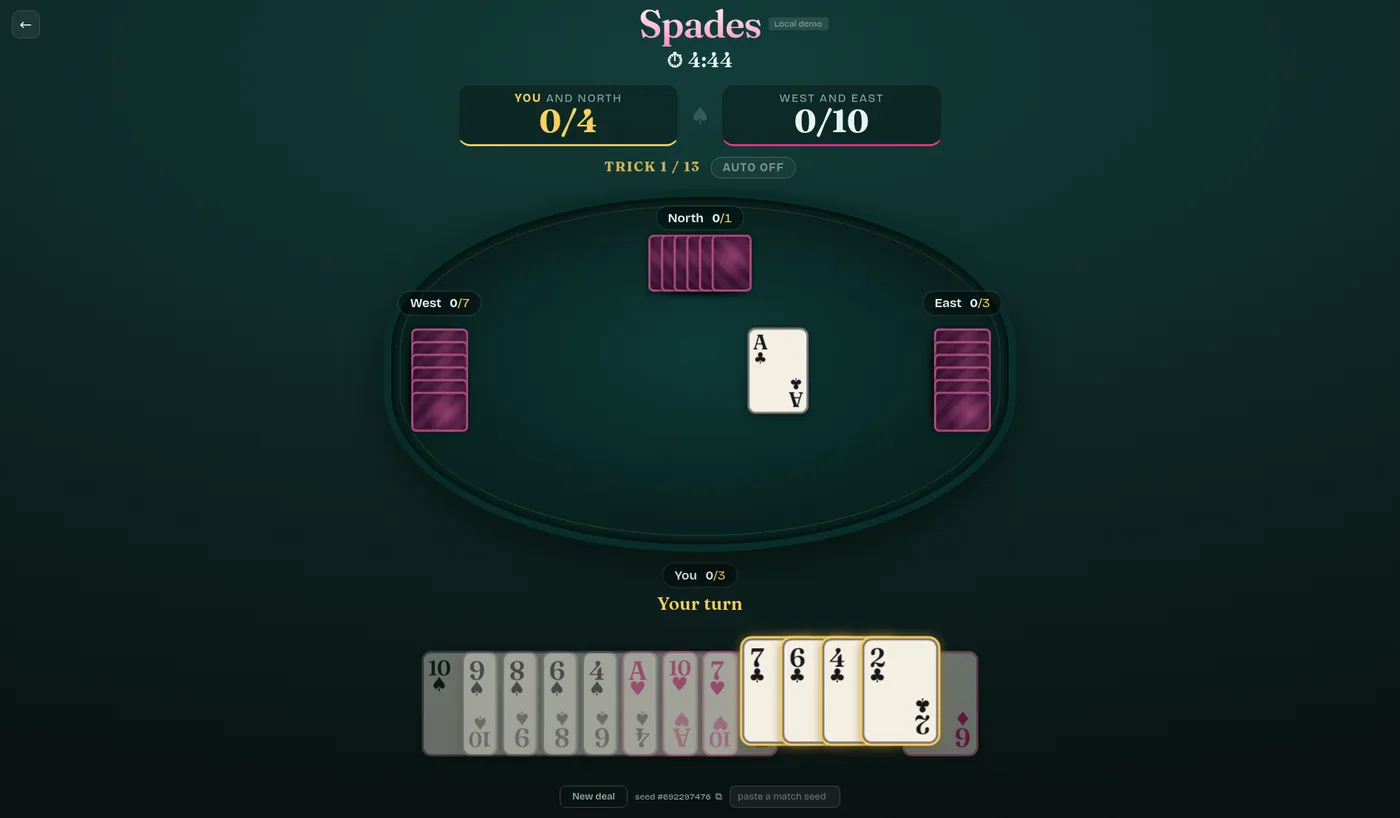 Spades5 minBid and trick-take, in duplicate
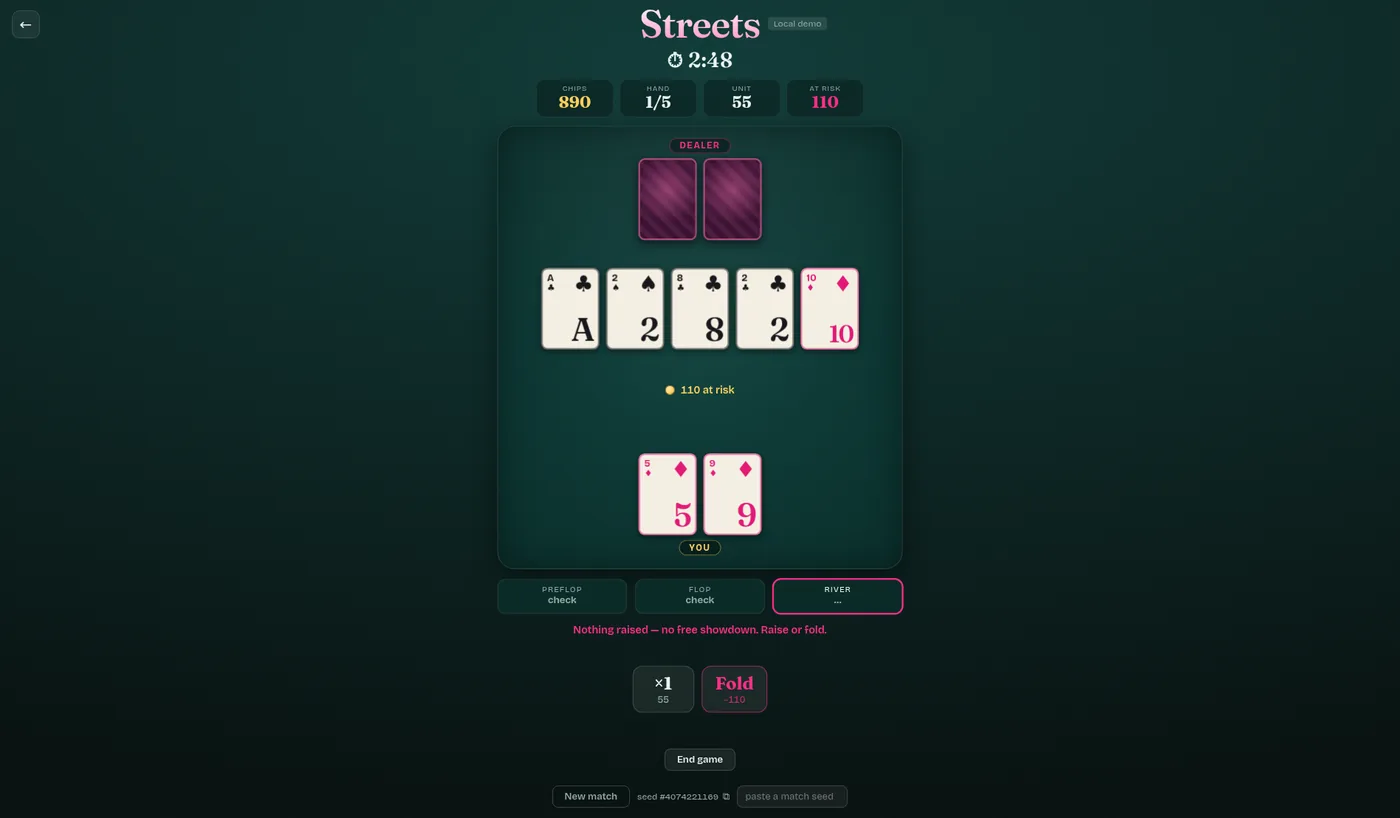 Streets3 minDuplicate hold'em, five hands
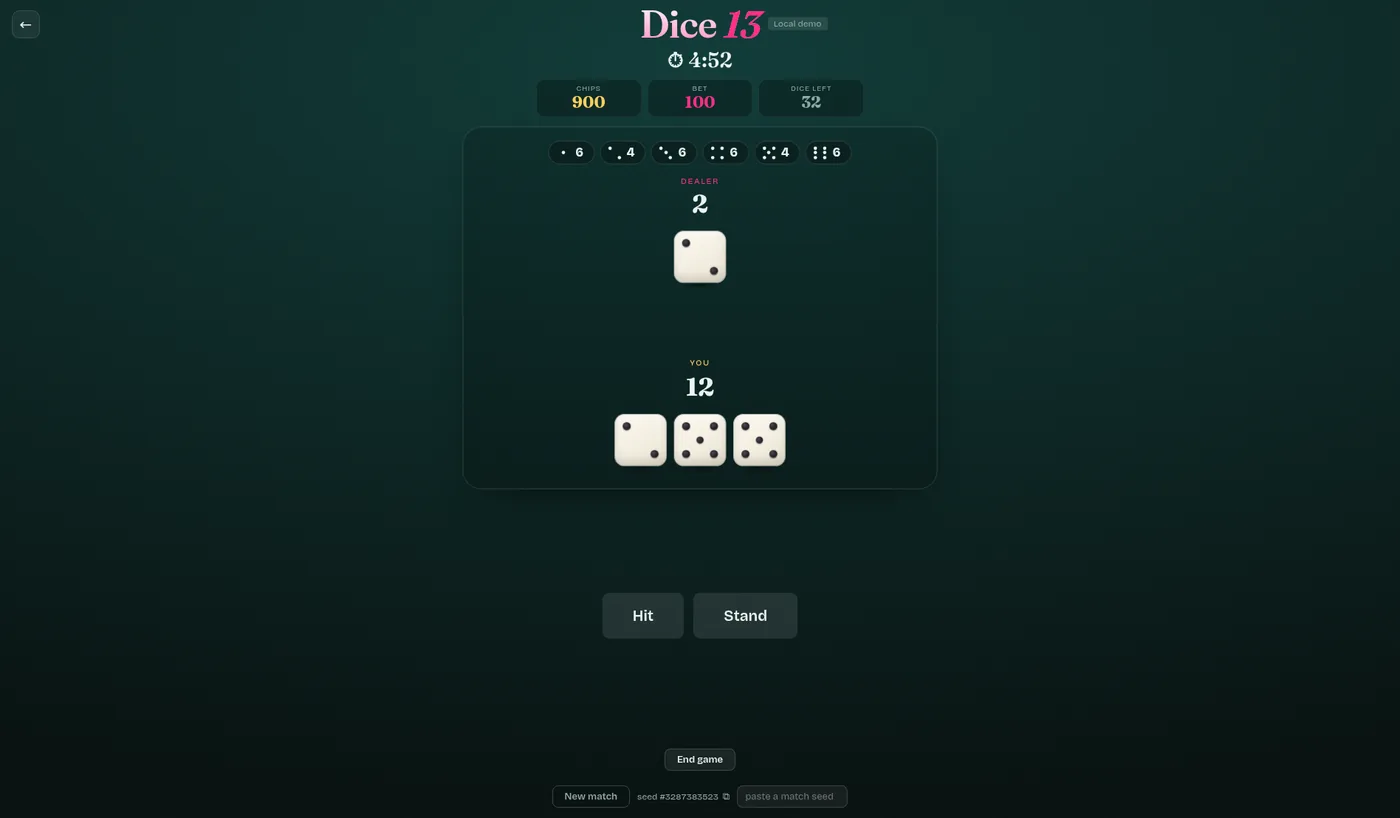 Dice 135 minBlackjack, played with dice
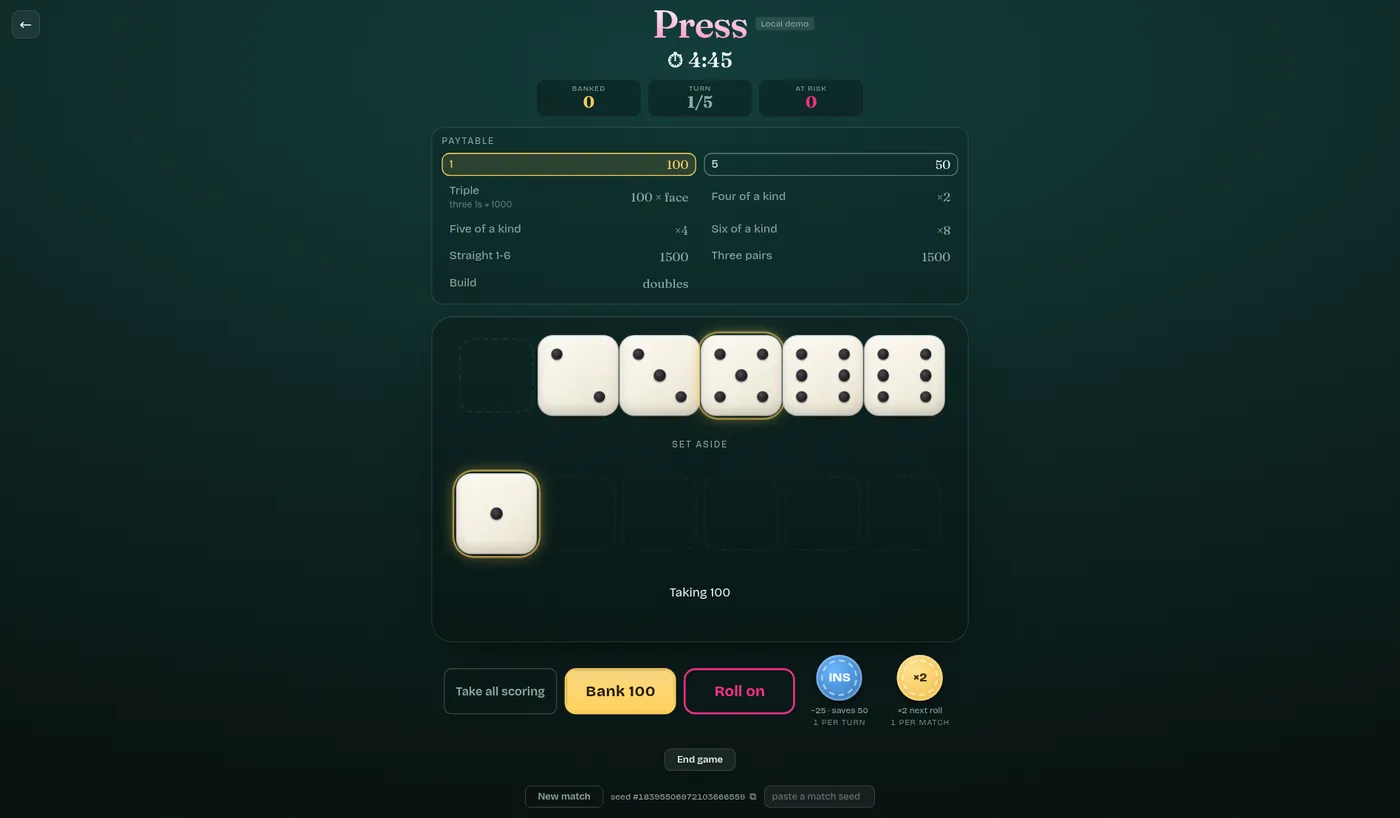 Press5 minPush your luck, or bank it
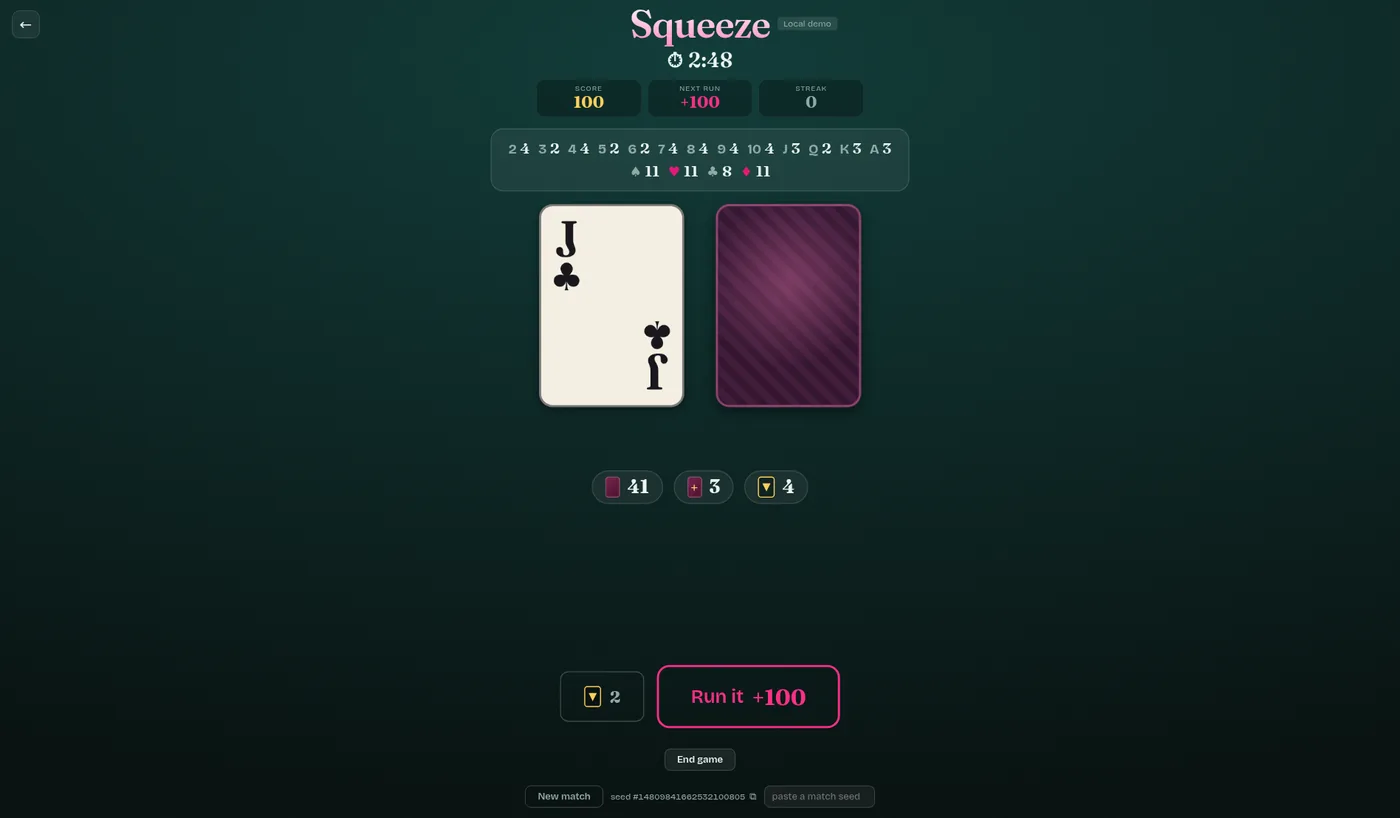 Squeeze3 minAnswer the card, or let the deck answer
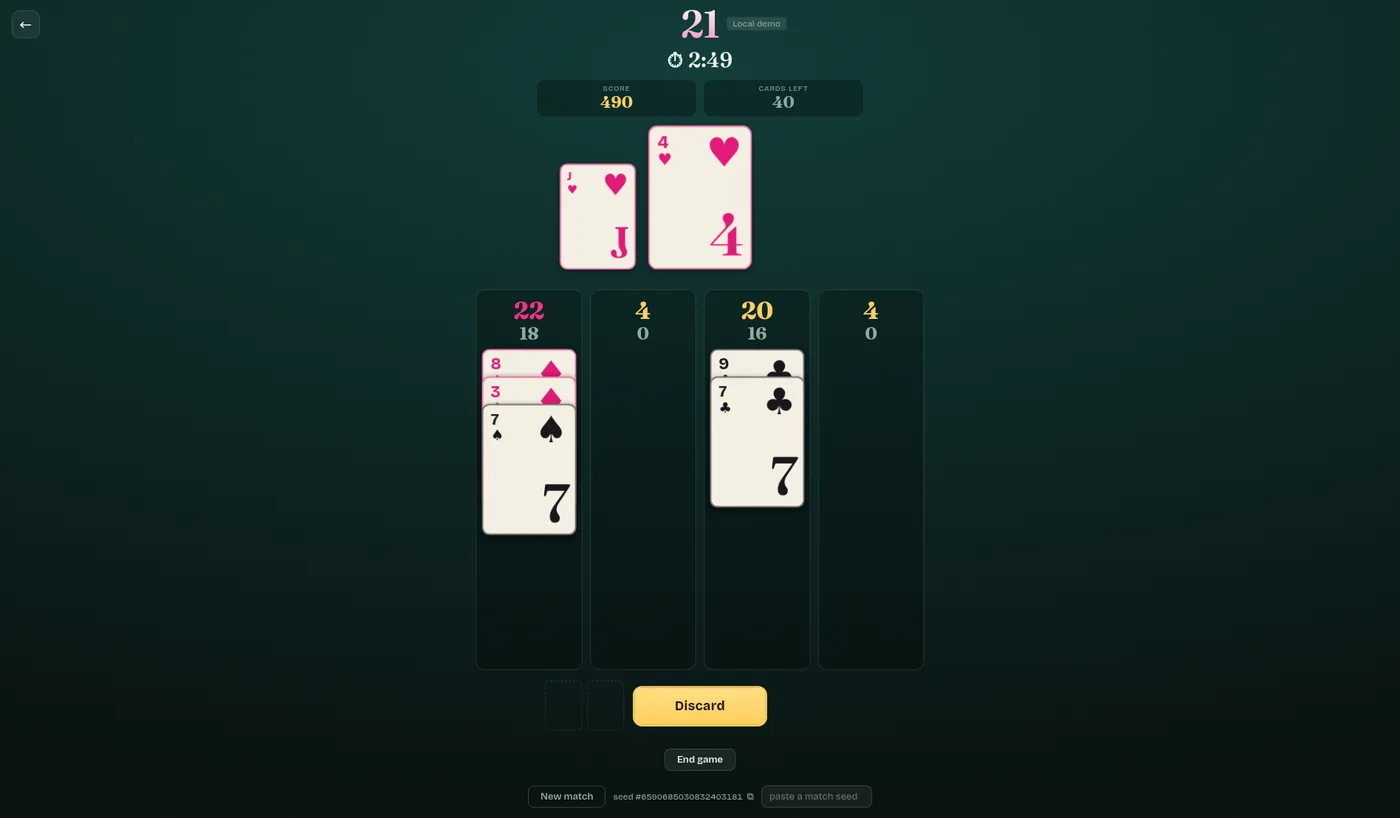 213 minFour columns, one deck, hit 21 exactly
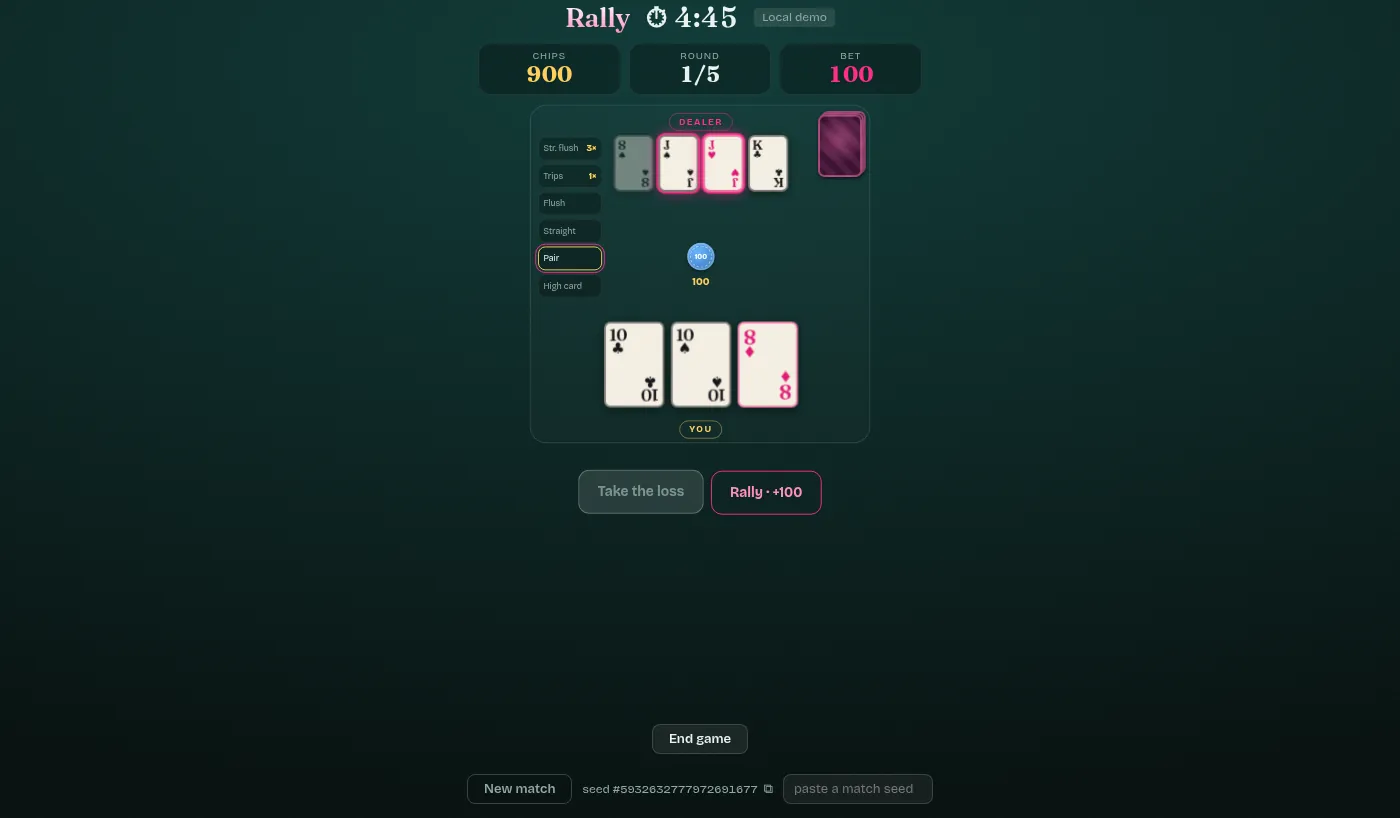 Rally5 minThree-card poker against the dealer
The games takes each one in turn and names the decision that decides it.
Why asynchronous
One deal, played twice
That identical deal is also why these games are asynchronous, which was a consequence before it was a feature. If what is compared is two people on the same cards, there is no table for the two of them to sit at.
What that construction does and does not settle — and what a player is handed once the match is over — is the argument in full.
The pool
The part no platform can build alone
Taking the clock out does not conjure an opponent. Somebody still has to have started that game and be waiting on a result, and inside one player base that is a lottery. It is why most head-to-head features quietly stop being opened.
So the pool is built to be shared: one matchmaker, one rating scale, however many platforms. Today a match seats two players of one operator — each platform that connects is another operator whose players stop waiting on a lottery inside a single product. That is the one thing here you could not have built for yourself, and the one thing that gets better without you doing anything.
What stays yours
You keep the players. We deal the cards.
Nothing a player pays you passes through us, and your market compliance stays where it is. What we charge for supplying the game is a separate number, agreed with you: the commercial model is written out in full, along with where the boundary runs.
Each game arrives as one iframe, opened with a short-lived token your backend mints for the player at the keyboard. Your server reads the result from a feed on ours.
Tell us what you run
If you would rather look first, the games are playable in a browser and the integration is documented in full.